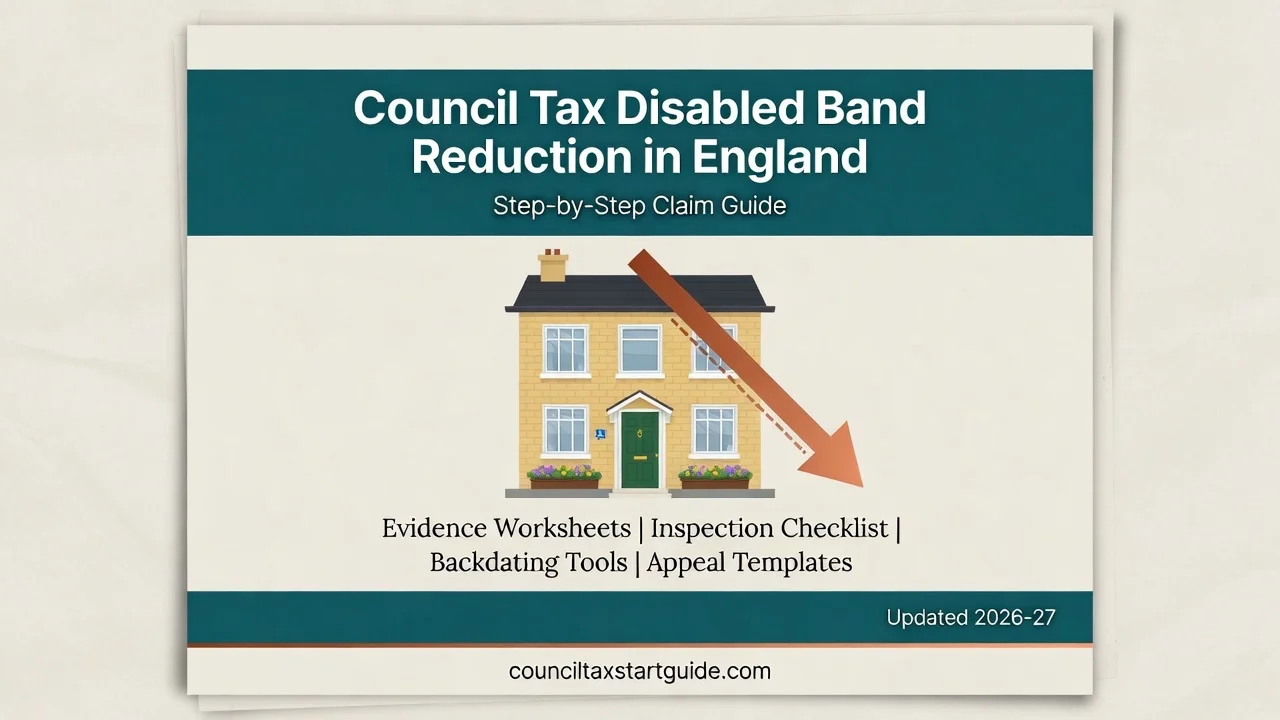
Your Home Already Qualifies — You Just Need the Council to Agree
The adapted bathroom is there. The ground-floor bedroom is there. The wheelchair moves through the house every day. But the council tax bill still charges the full band, because nobody told you the Disabled Band Reduction exists — or worse, somebody at the council told you that you need to be receiving PIP.
You don't. The law is clear: this reduction is about physical features in your home, not disability benefits. And it can be backdated for every year the adaptation has been in place, with no statutory time limit. That's hundreds or thousands of pounds sitting in the council's account that should be in yours.
The Claim Preparation System
The Claim Preparation System inside this guide is what separates a strong application from the kind that gets quietly refused. Council websites tell you the three qualifying features. They don't tell you how to prove yours qualifies, how to survive a property inspection, or how to build a backdating case that a revenues officer actually approves.
This guide does. It walks you through the statutory rules, the evidence councils expect to see, and the practical steps that turn a qualifying home into an approved application — or a refusal into a successful appeal.
What's Inside
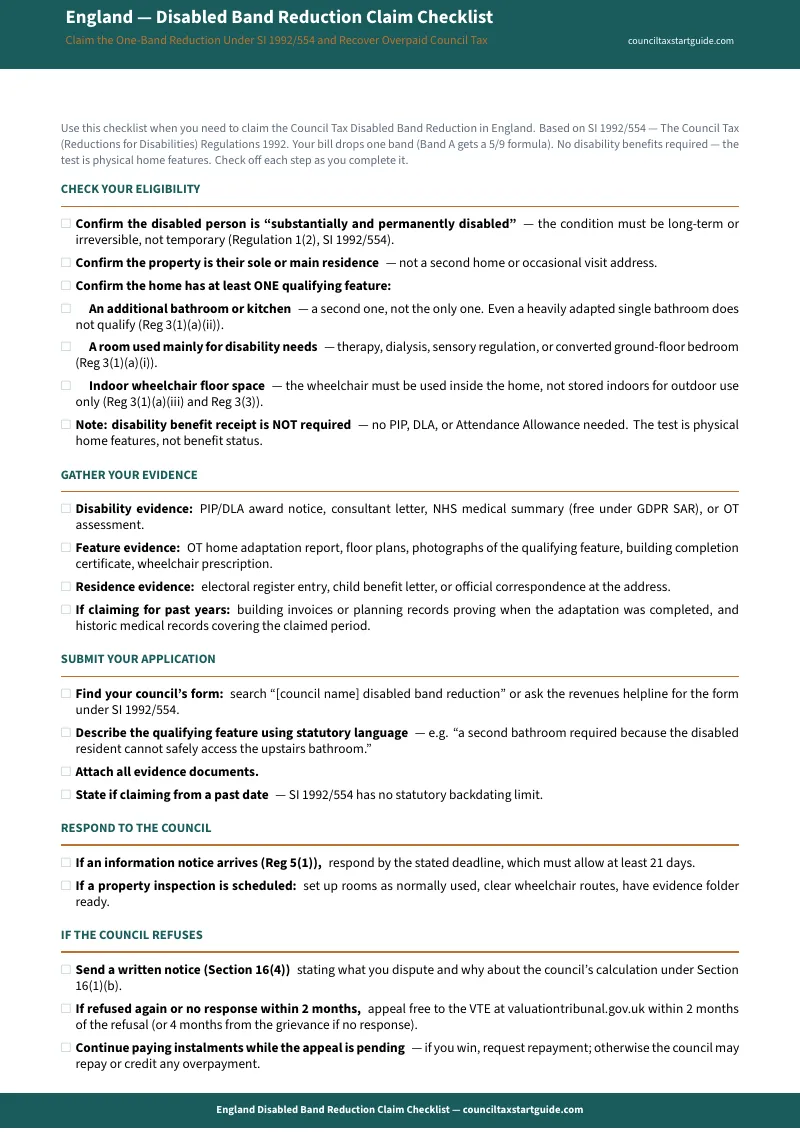
- The three qualifying features explained in plain English — an additional bathroom or kitchen, a room used mainly for the disabled person's needs, or indoor wheelchair floor space. Each limb broken down with the exact statutory test, what counts, what doesn't, and real VTE case examples so you know where the lines are before you apply
- Feature-to-Evidence Alignment Worksheet — maps each physical feature in your home directly to the statutory criteria, the clinical justification, and the documentary proof you need. When the council asks "why does this room qualify?", your answer writes itself
- Property Inspection Preparation Checklist — most claims involve a home visit from a council property inspector. The checklist covers room setup, evidence positioning, wheelchair route preparation, and a log for the inspector's comments
- Historical Backdating Chronology Log — a structured timeline tool for proving when the adaptation was completed, when the disability began, and which financial years you're claiming for. Councils don't volunteer backdating; this log makes the claim impossible to ignore
- Application Tracker — a chronological log of every submission, information notice, inspection, and written decision, so you have a contemporaneous record if you later need to escalate
- Letter of Authority Template — if you're applying on behalf of a relative, a fillable letter the council taxpayer signs, plus a covering note for LPA, deputyship, or DWP Appointeeship
- Step-by-step application procedure — from finding your council's form, through completing it using the statutory language that revenues officers recognise, to submitting with evidence and stating your backdating claim upfront
- Section 16 Grievance and VTE Appeal Tracker — if the council refuses, you have the right to appeal for free to the Valuation Tribunal for England. The tracker records the dispute notice, the two-month and four-month filing deadlines, what evidence to submit, and hearing notes
- Sibling scheme routing — not every disability situation falls under the band reduction. The guide cross-references the SMI exemption for dementia without physical adaptations, the carer disregard for live-in carers, and the care home exemption — so you don't waste time on the wrong scheme
Who This Guide Is For
- Disabled adults in adapted homes who want to claim for themselves
- Parents of disabled children whose home has a therapy room, sensory room, or second bathroom
- Adult children helping an elderly parent with mobility problems, dementia with physical adaptations, or a ground-floor bedroom conversion
- Live-in carers managing the household's council tax admin
- Anyone who has already been refused and wants to understand their appeal rights
Why Not Just Use the Council Website?
Council websites list the three qualifying features and give you a form. What they don't give you is the preparation that makes the difference between approval and refusal.
They don't explain how to frame a converted dining room as a qualifying therapy space under Regulation 3(1)(a)(i). They don't tell you what a property inspector is actually looking for, or what verbal comments to log during the visit. They don't provide a backdating chronology that lines up OT assessments, building invoices, and medical records across multiple financial years. And when the council refuses, their website won't walk you through the free VTE appeal process step by step.
The official claim process is free — this guide never pretends otherwise. What the guide provides is the structured preparation that turns a qualifying home into an approved claim.
Satisfaction Guarantee
Full refund, no time limit. If the guide isn't what you expected, email [email protected] and you'll get your money back. No questions, no deadline.
Start Your Claim
Download the free checklist to see whether your home qualifies, or get the full Claim Preparation System — with the Feature-to-Evidence Alignment Worksheet, inspection checklist, Historical Backdating Chronology Log, Application Tracker, Letter of Authority Template, and Section 16 Grievance and VTE Appeal Tracker — for .
Frequently Asked Questions
What if the rules change after I buy?
We update the guide when the rules change. Email us any time, even years later, and we'll send you the current edition free.